


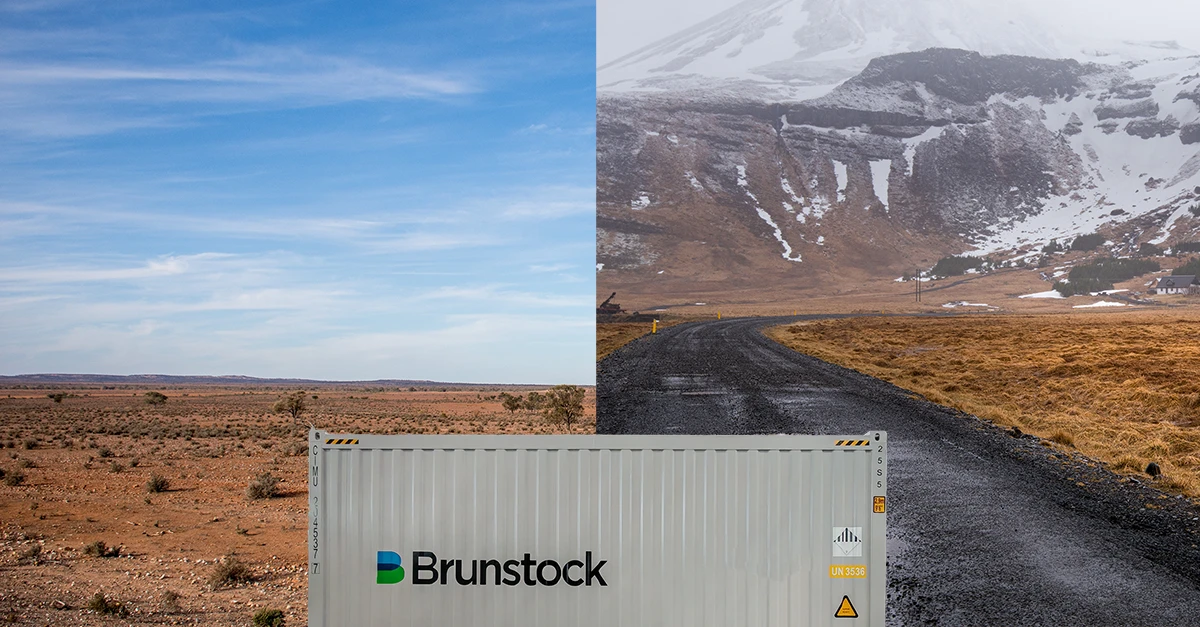
Earth doesn’t do mild. From searing heat to coastal salt, from dust storms to humidity that clings to every surface, our operating environments punish equipment that wasn’t designed for them. Energy storage systems are no exception. A BESS that performs beautifully in a lab can fail quickly in the field if its designers didn’t engineer for reality.
Brunstock takes the opposite approach. Resilience isn’t a marketing line. It’s a design philosophy that runs through every layer of our 5 MWh liquid cooling BESS — from the cell architecture to the container enclosure.
Built for the outdoors, not adapted to it
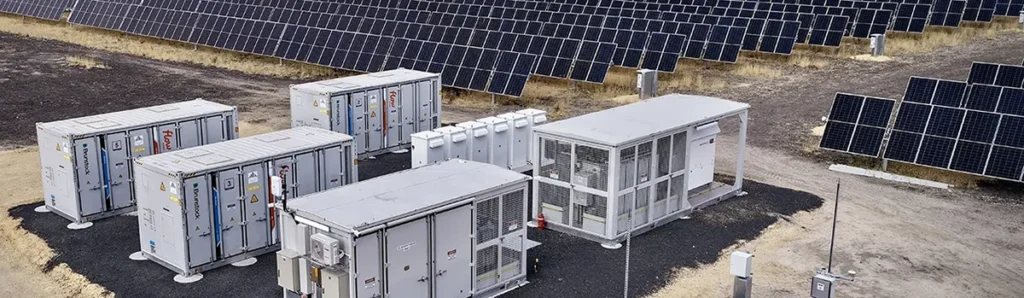
The Brunstock BESS is designed from the ground up as an outdoor system. The container enclosure is rated to IP55, offering protection against dust ingress and rain, making it suitable for harsh industrial and remote environments . This is not a repurposed shipping container. It’s a purpose-built housing for high‑value electrochemical assets.
The system is also engineered to operate across a wide ambient temperature range of −20°C to +45°C. That means reliable performance in desert heat, alpine cold and everything in between.
Thermal resilience through liquid cooling
Heat is the enemy of battery life and safety. That’s why Brunstock uses an integrated liquid cooling and heating system across every battery pack and rack. The thermal management system maintains temperature differences within the rack to just 3 °C, reducing auxiliary power consumption by 40% compared to air‑cooled systems .
This level of thermal precision protects against accelerated ageing, uneven cell performance and thermal stress — all common failure points in harsh climates.
Corrosion‑resistant materials and sealed architecture
Harsh environments don’t just challenge electronics. They attack metals, seals and joints. Brunstock’s design mitigates these risks through:
- sealed liquid cooling pipelines and connectors designed for long‑term reliability
- explosion venting and pressure‑relief features in each battery pack
- corrosion‑resistant materials and industrial‑grade cabinet construction
These features ensure the system withstands humidity, airborne salts and contaminants that would degrade lesser systems within years.
Multi‑layer safety and detection
Resilience also means safety systems that work under stress. Brunstock’s BESS includes composite fire detection (smoke, heat, CO and VOC) and an aerosol‑based suppression system compliant with NFPA 855 . Packet‑level detection, multi‑level warnings and cabin‑level alarms ensure issues are identified early, even in challenging environmental conditions.
Designed for real‑world installation
Harsh sites often mean uneven ground, dust, animals (lizards, rodents, ants etc.) and moisture. Brunstock’s installation requirements reflect this reality:
- bottom‑entry cable trenches with dust‑proof and animal‑proof design
- waterproof and moisture‑proof trenching to prevent cable degradation
- non‑combustible, level foundations to ensure long‑term stability
These aren’t optional extras. They’re part of a system engineered for decades of service in unforgiving locations.
Resilience is engineered, not assumed
A Brunstock BESS isn’t just equipment that gets installed. It’s equipment that lasts. Every design choice — from IP55 enclosures to liquid cooling, from corrosion‑resistant construction to multi‑layer safety — is made with one goal: to ensure reliable performance where conditions are toughest.
Because the world’s energy transition won’t happen in mild, controlled environments. It will happen in deserts, coastal regions, industrial sites and remote communities. And Brunstock builds for all of them.
Ready to take action?
Read more about our modular C&I and grid-scale BESS.
Please contact your Brunstock representative for technical information specific to your part of the world.

